Wander Now Travel uses affiliate links and participates in the Amazon Services LLC Associates Program. If you make a purchase, I may earn a small commission- at no extra cost to you. I only recommend what I trust and use. Your support helps me continue creating helpful travel content. Read my disclaimer for details.
I love how peaceful and magical Yosemite feels in the wintertime. The valley quiets down, snow covers the cliffs, and the scenery turns into a calm, sparkling wonderland. On one of my trips, I remember standing beside the Merced River, watching the frozen branches shimmer in the sunlight against the backdrop of the calm river. Moments like that stay with you long after you leave.
Winter also brings unexpected surprises. I once watched a massive icicle break free and crash down in a burst of mist and ice at Bridalveil Falls, which was both wild and thrilling. No matter how grown up my kids get, they still ask to stop along the road to slide down our favorite little snow hill with saucers in hand. Some traditions are worth keeping.
If you’re considering a cold-season trip, Yosemite in winter offers a calm beauty and a fresh way to see the park. After 30 years of visiting Yosemite in every season, my favorite time of year to visit is winter. Here are my tips for making the most of your trip.
Best Things to Do in Yosemite in Winter
Because both Tioga Road (the high-country section of Highway 120 East) and Glacier Point, beyond Badger Pass, are closed in the winter, your playground does get a bit smaller. But don’t worry, I’ll share plenty of things you can do in Yosemite Valley.
Sledding, Skiing and Snow Play
1) Highway 120 Hill Sledding
We always pack snow saucers and stop at a small hill along Highway 120 on the way to the park. My kids, even as adults, still remember this fondly and always want to sled there again. It’s hard to describe exactly where this is, but you’ll see tons of families parked along the side of the road and sledding down the hill (on the right side before you drop down into the Valley if you’re coming from Groveland).
2) Badger Pass Ski, Tube & Snowboard Area
If you want a groomed hill with tubing, or you’d like to ski, snowboard, or snowshoe, head to Badger Pass Ski, Tube and Snowboard Area.
I learned to ski at Badger Pass and have fond memories of riding the rope tow up the bunny hill and practicing how to stop by making a pizza shape with my skis. You can drive there if your vehicle is ready for snow, or ride the complimentary shuttle. Badger Pass has five ski lifts and ten runs, perfect for beginners and intermediates.
Operating Hours: It is usually open from mid-December to mid-March.
“In every walk with nature one receives far more than he seeks”
-John Muir
See Yosemite’s Winter Waterfalls
3) Bridalveil Falls
Seeing a huge icicle break off the top of the waterfall and plunge to the bottom was unforgettable, and it’s a memory I’ll always treasure. The short trail to this waterfall means you won’t get too cold while visiting.

4) Yosemite Falls
The Upper Yosemite Falls trail is open year-round, but it’s steep and icy, and can be covered in snow in winter, so I don’t recommend it unless you have microspikes. Instead, I suggest the Lower Yosemite Falls trail, which is much flatter, shorter and just as beautiful.

5) Vernal Falls
My Husband and son have hiked this trail in winter and enjoyed having fewer people around, but it’s very tough when covered in snow and ice. I prefer the valley floor trails myself, as I don’t do well with steep hikes.

6) Horsetail Falls
If you visit Yosemite in mid to late February, you can see Horsetail Falls transform into the stunning “Firefall”, glowing orange at sunset against the granite for just a few magical evenings.
The park gets crowded during this time, and it’s the only time during winter when you’ll need a reservation to enter.

Walk Easy, Scenic Winter Trails
7) Cook’s Meadow Loop
This flat, easy boardwalk keeps your feet dry and is one of my favorites. You’ll get amazing views of Half Dome and Yosemite Falls covered in snow. It’s a great way to see big scenery without trudging through deep snow.
8) Lower Yosemite Falls Trail
A short, family-friendly stroll leading to one of Yosemite’s most iconic sights. The falls roar through icy mist in winter, creating a magical, frosty atmosphere.
9) Valley Loop Trail
This flat trail winds through snowy meadows, along the Merced River and past granite walls that glow at sunset. Be sure to stop at Yosemite Valley Chapel to see its steeple framed by snowy trees. The whole loop is 11.5 miles, but you can do shorter sections. I recommend the west-side half-loop, from Lower Yosemite Falls to El Capitan Meadows, since it’s less snowy and icy than the south side in winter.

10) Mirror Lake Trail
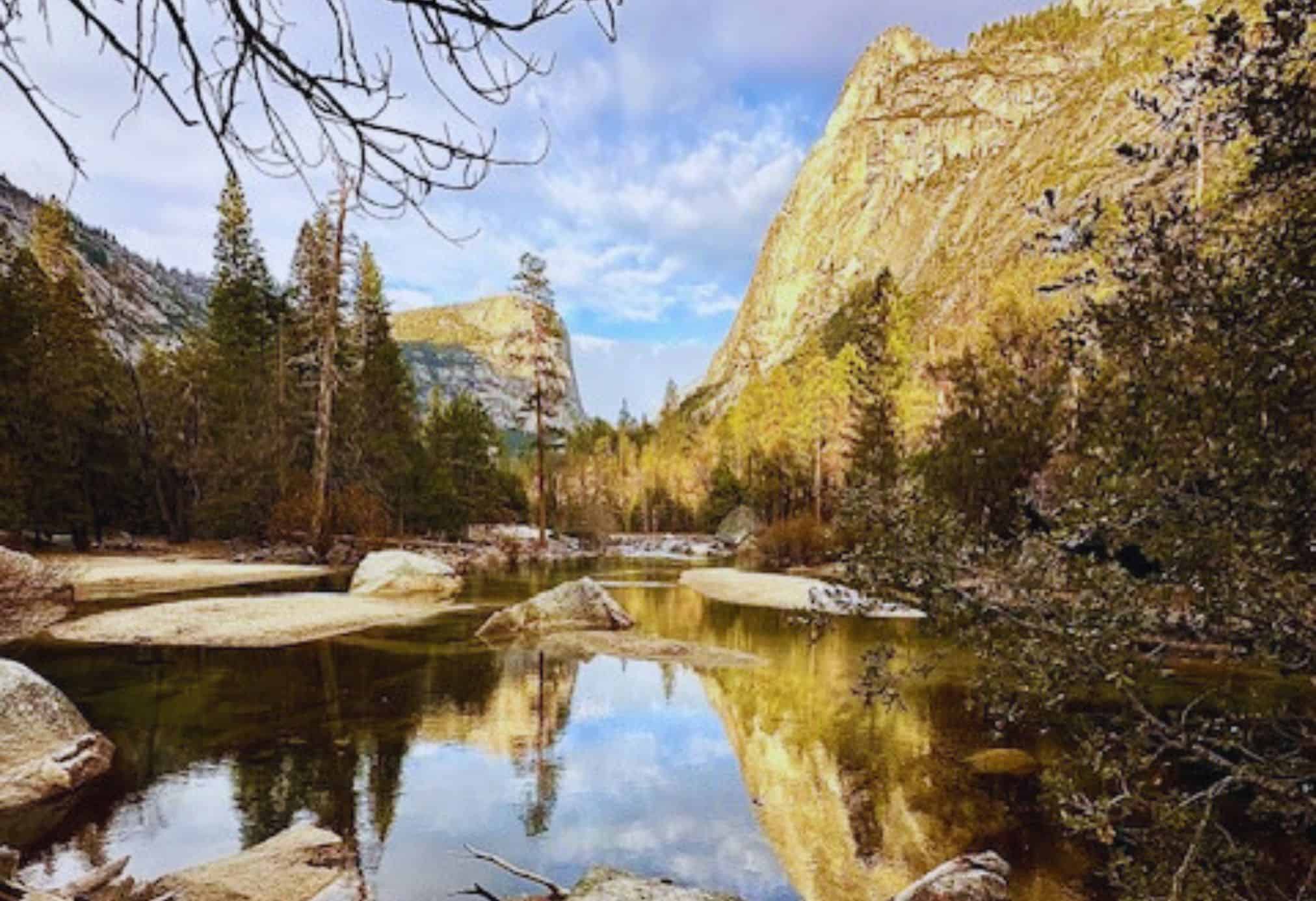
This is one of my favorite hikes. It’s peaceful to walk through the snow-dusted pine trees until you reach the calm lake, which reflects the granite walls above.
Enjoy Iconic Winter Viewpoints
11) Tunnel View or Highway 120 Viewpoint
As soon as you exit the Wawona Tunnel on Highway 41 in the south, the entire valley unfolds and takes your breath away. You’ll see all of Yosemite’s most iconic landmarks in one sweeping view, El Capitan towering on the left, Bridalveil Fall cascading down on the right and Half Dome glowing in the distance.
The Highway 120 pull-out offers an equally beautiful vantage point of Half Dome, the valley and El Capitan. It’s especially magical at sunrise, when the whole valley lights up!

12) Valley View
Snow dusts the banks of the Merced River, creating a mirror-like reflection of El Capitan and the cathedral spires rising behind it. The air feels crisp and still and you can often catch soft winter light glowing across the frozen ice sculptures that used to be bushes.

13) El Capitan Meadow
From this wide, quiet field, you can look up at the huge granite face of El Capitan. One of my favorite things to do is try to see who in your group is the first to spot the headlamps of climbers as they make their way up its massive walls.

Ice Skating at the Outdoor Rink
14) Ice Skating at Curry Village
The Curry Village Ice Rink is a classic winter activity in Yosemite. I have fond memories of my kids learning to skate here, then warming up by the firepit with my hot cocoa in hand, marveling at Half Dome glowing in the background.
Operating Hours: Mid-November through the beginning of March, with 2.5-hour-long sessions offered M-F from noon- 9:30 pm and 8:30 am-9:30 pm on the weekends.
Watch for Winter Wildlife
15) Ravens, Deer and Coyotes, Oh My!
You’ll often see Brewer’s blackbirds or ravens, deer and coyotes more easily in winter. Early mornings are the best time to spot wildlife in the snowy meadows.
Spend Time at the Ahwahnee
16) Take a Tour or Eat Dinner at the Historic Hotel
Taking a tour of the historic Ahwahnee Hotel feels like stepping back in time. After exploring its iconic architecture and warming up by its glowing fireplaces, settle in for a delicious dinner surrounded by soaring beams. From the Ahwahnee Dining Room, you can see Upper Yosemite Fall through the tall picture windows, which is especially beautiful in winter when the falls shift between flowy, misty and sometimes partially frozen.
If you decide to eat dinner at the Ahwahnee, consider making reservations in advance and be aware of the dress code. For dinner, plan to dress a bit nicer—long pants and a collared shirt, a blouse and slacks, or a dress are perfect, while casual items like shorts, flip-flops, tank tops, or baseball caps aren’t allowed.
Spend a Cozy Evening Back at the Lodge
17) Relax at your Lodge
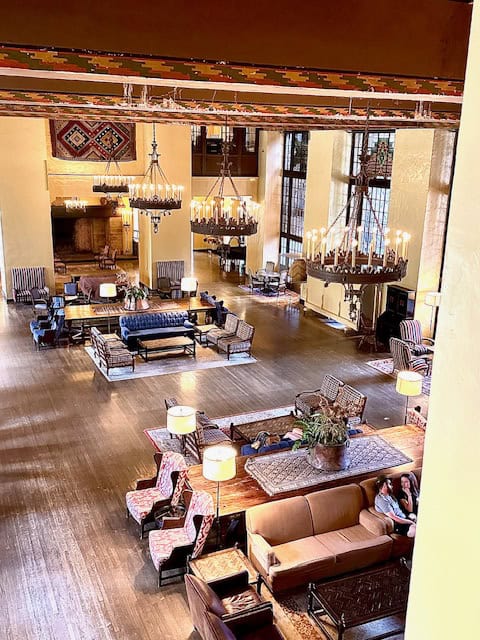
Whether you’re curled up by the fireplace at Firefall Ranch, soaking in the hot tubs at Rush Creek Lodge, or relaxing in the Great Lounge at the Ahwahnee, winter evenings are perfect for unwinding and enjoying the day’s memories.
Where to Stay in Yosemite in Winter
Choosing the right lodging makes your winter trip easier and more comfortable. Here are great options both inside and just outside the park.
Staying Inside Yosemite Park
- The Ahwahnee- Historic, cozy and iconic. You can say you’ve stayed in the same place as Queen Elizabeth II, Walt Disney, Lucille Ball, and Presidents like John F. Kennedy, Ronald Reagan, and Barack Obama, to name a few notable people.
- Yosemite Valley Lodge– A great mid-range option steps from Yosemite Falls. Ideal for families and relaxed winter exploring.
- Curry Village– Budget-friendly heated cabins in the valley. Simple, rustic and close to winter trails.
Staying Just Outside Yosemite Park
- Firefall Ranch (Groveland- Big Oak Flat Entrance on Highway 120)- A beautiful 300-acre property with luxury cottages, fireplaces and modern comfort. A wonderful winter retreat for couples, families or anyone wanting space.
- Rush Creek Lodge & Spa (Groveland- Big Oak Flat Entrance on Highway 120)- Located just a half mile from the park entrance. Heated saltwater pool, hot tubs, spa, modern rooms, but it has a cozy lodge feel perfect for winter downtime.
- Yosemite View Lodge (El Portal- Arch Rock Entrance off Highway 140)- Located right along the Merced River and minutes from the park. Spacious rooms, some with kitchenettes and great for families.
- Yosemite Cedar Lodge (El Portal- Arch Rock Entrance off Highway 140)- Comfortable, quiet and easy to access year-round. A solid, practical choice for winter stays.
What to Pack for Yosemite in Winter
Warm Layers You’ll Use
- Insulate Jacket for Women and Men
- Fleece or midlayer for Women and Men
- Thermal tops and wool long underwear to wick away moisture for Women and Men. I’d avoid cotton as it absorbs and retains moisture, which can make you cold and eventually lead to hypothermia.
- Warm socks, gloves and and a hat
Shoes & Trail Gear
- Waterproof hiking boots
- Traction cleats or microspikes
- Snowshoes (optional-can be rented)
Safety & Car Essentials
- Tire Chains- All vehicles (even AWD and 4WD) are required to carry chains when chain controls are in place
- Ice scraper
Extras
- Handwarmers
- Microfiber towel for scenic stops
- Thermos for hot drinks
- Snacks- Winter food options may be limited

Practical Tips for a Safe & Stress-Free Winter Visit
Winter in Yosemite is stunning, but there are some hidden hazards. Being aware of them helps you enjoy the scenery safely.
- Start your day early- Winter days are short and the morning light is best for photos
- Watch out for black Ice, which can form on shaded roads, bridges, parking lots and even popular paths, especially in the morning or late afternoon. Drive slowly, leave extra space to stop and be careful when getting out of your car since these slippery spots can be hard to see.
- Check conditions before entering the park- Look up closures and storm updates.
- Take your time- Let winter slow you down in a good way. Enjoy quiet moments, scenic walks and surprising views.
Frequently Asked Questions
Is it worth going to Yosemite in the Winter?
Yosemite in winter feels like stepping into a snow-dusted wonderland. The crowds thin, the granite cliffs glow even brighter against the crisp air, and iconic spots like Yosemite Falls, El Capitan, and Half Dome take on a peaceful, almost magical stillness. With easy valley walks, sparkling scenery and serene photo opportunities, winter is one of the most rewarding and underrated times to experience the park.
Is it safe to drive to Yosemite in Winter?
Yes, driving in Yosemite in winter can be safe as long as you’re prepared and pay attention to conditions. Roads are plowed regularly, but snow, black ice and temporary chain controls are common, especially after storms or in shaded areas.
Check the Yosemite road conditions page before you go, carry tire chains (even if you have an AWD or 4WD), and drive slowly with extra stopping distance. With a bit of caution, winter driving in the park is very manageable and absolutely worth the visit.
Which Yosemite entrances are open in Winter?
Only Yosemite’s lower-elevation entrances remain open in winter. You can access the park through the Big Oak Flat Entrance (Highway 120 West), the Arch Rock Entrance (Highway 140), and the South Entrance (Highway 41). However, the Tioga Pass entrance (Highway 120 East) closes each year due to heavy snow, usually from November through late Spring. It’s best to check road conditions before you go and be prepared for chain requirements after storms.
How much Snowfall does Yosemite get?
Yosemite Valley receives about 30 inches of snow each year. Higher elevations like Badger Pass and Tioga Road can get several feet, up to 90 inches a year. Since storms can roll in quickly, always check the weather and road updates before your trip.
Final Thoughts
Winter turns Yosemite into a peaceful, sparkling and serene place. Moments like frozen riverbanks, drifting snow and icy waterfalls stay with you and create memories you’ll treasure, just as I have.
If you’ve ever wondered whether Yosemite is worth visiting in the wintertime, the answer is enthusiastically yes. With a warm jacket, a relaxed pace and a little preparation, winter might become your favorite season in the park too.